 Add to Chrome
 Add to Firefox
 Add to Edge
A Clinically Validated Foundation Model for Comprehensive Lung Pathology Interpretation
May 25, 2026
Pathological assessment guides lung cancer diagnosis, treatment selection, and prognostic evaluation, yet current CPath approaches rely on task-specific models for isolated objectives. Although pan-cancer foundation models offer versatility, they lack subspecialty-level depth and have not been evaluated across clinical workflows or prospectively validated in real-world settings. We introduce PulmoFoundation, a multi-center, prospectively validated, randomized controlled trial (RCT)-evaluated foundation model for comprehensive lung pathology assessment across pre-operative, intra-operative, and post-operative care. Built upon Virchow2 via subspecialty-specific pretraining using ~40,000 diagnostic H&E-stained whole-slide images (WSIs), PulmoFoundation was systematically evaluated on ~26,000 WSIs across 32 clinically relevant tasks. In addition to accurately predicting molecular markers and patient survival, our model achieves clinical-grade performance in core diagnostic tasks across biopsy, frozen section, and surgical resection slides. In a registered prospective study of 1,357 patients across 11 diagnostic tasks, our model achieved an average AUC of 92.3%. Using pre-specified triage thresholds, PulmoFoundation could reduce additional second-review burden for 68.8% of biopsies and 83.0% of frozen sections, and defer 44.5% of IHC stain orders, with PPVs of 1.0, 0.991, and 0.966. Beyond prospective validation, we conducted a crossover RCT with eight pathologists, in which AI assistance improved diagnostic accuracy across 4,928 case-reader pairs (91.7% w/ AI vs. 83.8% w/o AI). AI assistance also reduced median diagnostic time by 19.6%, increased diagnostic confidence by 8.7%, and improved inter-rater agreement from moderate (kappa = 0.56) to substantial (kappa = 0.76). Together, these evaluations support PulmoFoundation as a clinically validated decision-support system for lung pathology.

PointNeRT: A Physics Aware Neural Ray Tracing Surrogate for Propagation Channel Modeling
May 12, 2026Ray tracing (RT) has emerged as a key tool for propagation channel modeling and network planning. Conventional RT is based on electromagnetic (EM) wave theory and its application relies on detailed mesh-based environment representations and material properties. In realistic environments, limited environmental geometry and material uncertainties hinder its scalability to complex scenarios. In this paper, we propose a novel physics aware neural RT surrogate named PointNeRT to address these limitations. The proposed model directly takes point clouds as environmental input, and efficiently reconstruct multipath without explicitly constructing mesh models or manually defining EM interaction rules. PointNeRT adopts a hop-by-hop modeling strategy guided by physical interaction constraints. It supports sequential prediction of multipath propagation and power attenuation. Numerical results and experiments demonstrate that the proposed method implicitly captures surface normal characteristics and EM material effects. It further achieves robust generalization in mobility scenarios and provides a physics-guided neural modeling of multipath propagation.
SOLARIS: Speculative Offloading of Latent-bAsed Representation for Inference Scaling
Apr 13, 2026Recent advances in recommendation scaling laws have led to foundation models of unprecedented complexity. While these models offer superior performance, their computational demands make real-time serving impractical, often forcing practitioners to rely on knowledge distillation-compromising serving quality for efficiency. To address this challenge, we present SOLARIS (Speculative Offloading of Latent-bAsed Representation for Inference Scaling), a novel framework inspired by speculative decoding. SOLARIS proactively precomputes user-item interaction embeddings by predicting which user-item pairs are likely to appear in future requests, and asynchronously generating their foundation model representations ahead of time. This approach decouples the costly foundation model inference from the latency-critical serving path, enabling real-time knowledge transfer from models previously considered too expensive for online use. Deployed across Meta's advertising system serving billions of daily requests, SOLARIS achieves 0.67% revenue-driving top-line metrics gain, demonstrating its effectiveness at scale.
Channel Measurements and Modeling based on Composite Environmental Factor for Urban Street-Canyon Intersections
Apr 02, 2026In urban environments, vehicle-to-everything (V2X) communications require accurate wireless channel characterization. This requirement is particularly critical at street-canyon intersections, where building blockage and rich multipath propagation can severely degrade link reliability. Due to its unique environmental layout, the channel characteristics in urban canyon are influenced by building distribution. However, this feature has not been well captured in existing channel models. In this paper, we propose an environment-related statistical channel model based on 5.8~GHz channel measurements. We construct a composite environmental factor to characterize environmental differences in intersections. Then, the factor is incorporated into 3GPP path-loss model and further linked to small-scale channel parameters. Finally, accuracy of the proposed model is validated using second-order channel statistics. The results show that the proposed model can effectively characterize propagation properties of urban street-canyon intersection channels with different building conditions. The proposed model provides a physically interpretable and statistically effective framework for channel simulation and performance evaluation in urban vehicular scenarios.
Deep Learning Based Site-Specific Channel Inference Using Satellite Images
Mar 30, 2026Site-specific channel inference plays a critical role in the design and evaluation of next-generation wireless communication systems by considering the surrounding propagation environment. However, traditional methods are unscalable, while existing AI-based approaches using satellite image are confined to predicting large-scale fading parameters, lacking the capacity to reconstruct the complete channel impulse response (CIR). To address this limitation, we propose a deep learning-based site-specific channel inference framework using satellite images to predict structured Tapped Delay Line (TDL) parameters. We first establish a joint channel-satellite dataset based on measurements. Then, a novel deep learning network is developed to reconstruct the channel parameters. Specifically, a cross-attention-fused dual-branch pipeline extracts macroscopic and microscopic environmental features, while a recurrent tracking module captures the long-term dynamic evolution of multipath components. Experimental results demonstrate that the proposed method achieves high-quality reconstruction of the CIR in unseen scenarios, with a Power Delay Profile (PDP) Average Cosine Similarity exceeding 0.96. This work provides a pathway toward site-specific channel inference for future dynamic wireless networks.
Emergent Dexterity via Diverse Resets and Large-Scale Reinforcement Learning
Mar 16, 2026Reinforcement learning in massively parallel physics simulations has driven major progress in sim-to-real robot learning. However, current approaches remain brittle and task-specific, relying on extensive per-task engineering to design rewards, curricula, and demonstrations. Even with this engineering, they often fail on long-horizon, contact-rich manipulation tasks and do not meaningfully scale with compute, as performance quickly saturates when training revisits the same narrow regions of state space. We introduce \Method, a simple and scalable framework that enables on-policy reinforcement learning to robustly solve a broad class of dexterous manipulation tasks using a single reward function, fixed algorithm hyperparameters, no curricula, and no human demonstrations. Our key insight is that long-horizon exploration can be dramatically simplified by using simulator resets to systematically expose the RL algorithm to the diverse set of robot-object interactions which underlie dexterous manipulation. \Method\ programmatically generates such resets with minimal human input, converting additional compute directly into broader behavioral coverage and continued performance gains. We show that \Method\ gracefully scales to long-horizon dexterous manipulation tasks beyond the capabilities of existing approaches and is able to learn robust policies over significantly wider ranges of initial conditions than baselines. Finally, we distill \Method \ into visuomotor policies which display robust retrying behavior and substantially higher success rates than baselines when transferred to the real world zero-shot. Project webpage: https://omnireset.github.io
A Deployment-Friendly Foundational Framework for Efficient Computational Pathology
Feb 15, 2026Pathology foundation models (PFMs) have enabled robust generalization in computational pathology through large-scale datasets and expansive architectures, but their substantial computational cost, particularly for gigapixel whole slide images, limits clinical accessibility and scalability. Here, we present LitePath, a deployment-friendly foundational framework designed to mitigate model over-parameterization and patch level redundancy. LitePath integrates LiteFM, a compact model distilled from three large PFMs (Virchow2, H-Optimus-1 and UNI2) using 190 million patches, and the Adaptive Patch Selector (APS), a lightweight component for task-specific patch selection. The framework reduces model parameters by 28x and lowers FLOPs by 403.5x relative to Virchow2, enabling deployment on low-power edge hardware such as the NVIDIA Jetson Orin Nano Super. On this device, LitePath processes 208 slides per hour, 104.5x faster than Virchow2, and consumes 0.36 kWh per 3,000 slides, 171x lower than Virchow2 on an RTX3090 GPU. We validated accuracy using 37 cohorts across four organs and 26 tasks (26 internal, 9 external, and 2 prospective), comprising 15,672 slides from 9,808 patients disjoint from the pretraining data. LitePath ranks second among 19 evaluated models and outperforms larger models including H-Optimus-1, mSTAR, UNI2 and GPFM, while retaining 99.71% of the AUC of Virchow2 on average. To quantify the balance between accuracy and efficiency, we propose the Deployability Score (D-Score), defined as the weighted geometric mean of normalized AUC and normalized FLOP, where LitePath achieves the highest value, surpassing Virchow2 by 10.64%. These results demonstrate that LitePath enables rapid, cost-effective and energy-efficient pathology image analysis on accessible hardware while maintaining accuracy comparable to state-of-the-art PFMs and reducing the carbon footprint of AI deployment.
Artificial Intelligence Empowered Channel Prediction: A New Paradigm for Propagation Channel Modeling
Jan 14, 2026This paper proposes a novel paradigm centered on Artificial Intelligence (AI)-empowered propagation channel prediction to address the limitations of traditional channel modeling. We present a comprehensive framework that deeply integrates heterogeneous environmental data and physical propagation knowledge into AI models for site-specific channel prediction, which referred to as channel inference. By leveraging AI to infer site-specific wireless channel states, the proposed paradigm enables accurate prediction of channel characteristics at both link and area levels, capturing spatio-temporal evolution of radio propagation. Some novel strategies to realize the paradigm are introduced and discussed, including AI-native and AI-hybrid inference approaches. This paper also investigates how to enhance model generalization through transfer learning and improve interpretability via explainable AI techniques. Our approach demonstrates significant practical efficacy, achieving an average path loss prediction root mean square error (RMSE) of $\sim$ 4 dB and reducing training time by 60\%-75\%. This new modeling paradigm provides a foundational pathway toward high-fidelity, generalizable, and physically consistent propagation channel prediction for future communication networks.
MambaMIL+: Modeling Long-Term Contextual Patterns for Gigapixel Whole Slide Image
Dec 19, 2025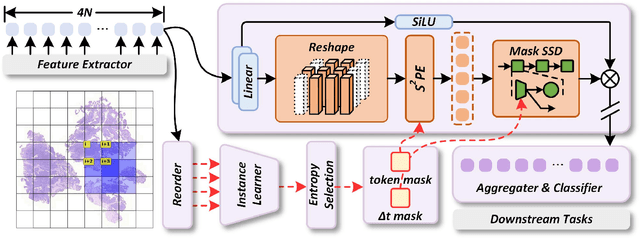
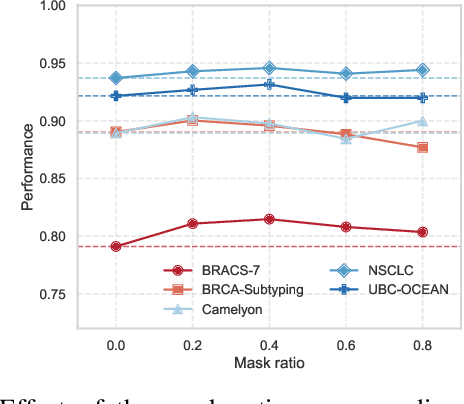
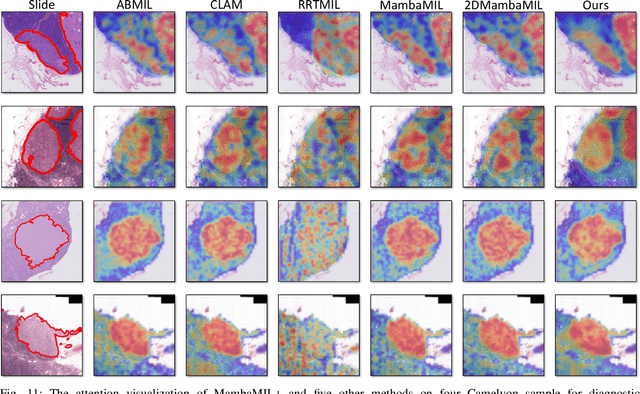
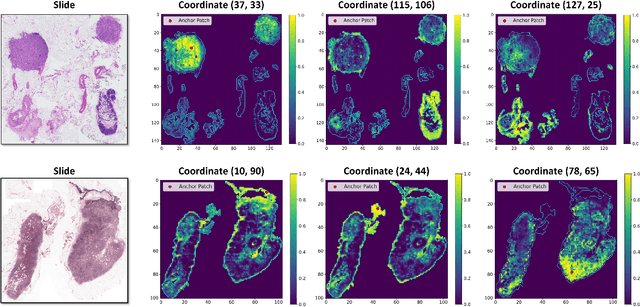
Whole-slide images (WSIs) are an important data modality in computational pathology, yet their gigapixel resolution and lack of fine-grained annotations challenge conventional deep learning models. Multiple instance learning (MIL) offers a solution by treating each WSI as a bag of patch-level instances, but effectively modeling ultra-long sequences with rich spatial context remains difficult. Recently, Mamba has emerged as a promising alternative for long sequence learning, scaling linearly to thousands of tokens. However, despite its efficiency, it still suffers from limited spatial context modeling and memory decay, constraining its effectiveness to WSI analysis. To address these limitations, we propose MambaMIL+, a new MIL framework that explicitly integrates spatial context while maintaining long-range dependency modeling without memory forgetting. Specifically, MambaMIL+ introduces 1) overlapping scanning, which restructures the patch sequence to embed spatial continuity and instance correlations; 2) a selective stripe position encoder (S2PE) that encodes positional information while mitigating the biases of fixed scanning orders; and 3) a contextual token selection (CTS) mechanism, which leverages supervisory knowledge to dynamically enlarge the contextual memory for stable long-range modeling. Extensive experiments on 20 benchmarks across diagnostic classification, molecular prediction, and survival analysis demonstrate that MambaMIL+ consistently achieves state-of-the-art performance under three feature extractors (ResNet-50, PLIP, and CONCH), highlighting its effectiveness and robustness for large-scale computational pathology
Meta Lattice: Model Space Redesign for Cost-Effective Industry-Scale Ads Recommendations
Dec 15, 2025The rapidly evolving landscape of products, surfaces, policies, and regulations poses significant challenges for deploying state-of-the-art recommendation models at industry scale, primarily due to data fragmentation across domains and escalating infrastructure costs that hinder sustained quality improvements. To address this challenge, we propose Lattice, a recommendation framework centered around model space redesign that extends Multi-Domain, Multi-Objective (MDMO) learning beyond models and learning objectives. Lattice addresses these challenges through a comprehensive model space redesign that combines cross-domain knowledge sharing, data consolidation, model unification, distillation, and system optimizations to achieve significant improvements in both quality and cost-efficiency. Our deployment of Lattice at Meta has resulted in 10% revenue-driving top-line metrics gain, 11.5% user satisfaction improvement, 6% boost in conversion rate, with 20% capacity saving.